Pressure-Relief Air Cushion Buying Guide
Release date:
11 Sep,2025
Source:
The formation of pressure ulcers (bedsores): it’s not simply caused by "prolonged pressure," but rather by the combined action of four major factors—pressure, friction, moisture, and body temperature—which together lead to localized tissue ischemia and necrosis. What’s the difference between a standard mattress and a professional anti-bedsore air cushion?
Standard mattress: Provides static support, causing pressure to continuously concentrate on bony prominences (such as the sacrum, tailbone, or ankles).
Pressure-relief air mattress: By dynamically adjusting support points through circulating airflow, it maximizes the distribution of body pressure across a wider area, fundamentally eliminating continuous pressure on any single point.

Please select according to the user's situation and determine the risk level:
1. Bedridden and completely unable to turn over independently
2. Overweight (>90kg) or severely underweight (<40kg)
3. Urinary and fecal incontinence, leading to prolonged skin exposure to a moist environment
4. Suffering from chronic conditions such as diabetes and circulatory disorders
5. Localized skin redness and purpling have appeared (early stage of pressure ulcers)
1. Economy & Practical Series → [Basic Upgrade Model]
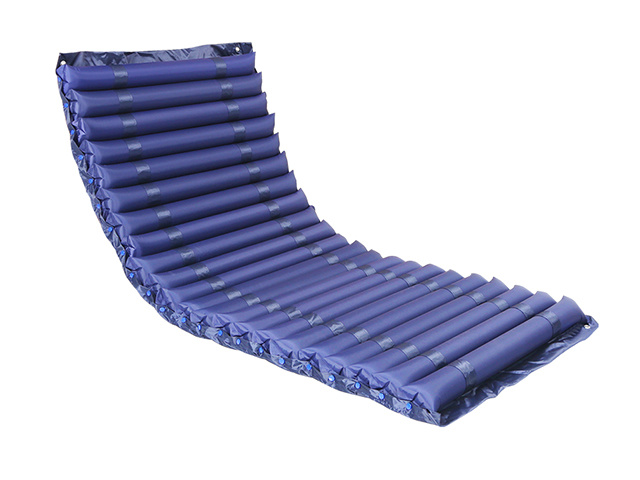
Features: Alternating cyclical fluctuations for no-turning-needed comfort, sleep-noise-reducing air pump, adjustable softness and firmness of air strips, and constant-pressure sleep support.
Suitable for: individuals who are long-term bedridden, experiencing functional decline/paralysis/mobility issues, or have thin skin.
Recommended models: S01, S61-PU

2. Premium Advanced Series → [Massage Care Edition]
Features: Replaces manual daily massage care, alternating cyclical pressure relief to eliminate the need for repositioning, and a dual-core rapid-inflation air pump.
Suitable for: individuals with paralysis, limited mobility, or those who are confined to bed long-term,
Recommended models: F38, F91


Features: Multi-functional and fully automatic, one-touch back-lifting, leg-raising, and turning; remote control operation; voice alert notifications; intelligent dual-pump core for rapid heating.
Suitable for: individuals with paralysis, limited mobility, and those who are bedridden long-term
Recommended model: F73

IV. Recommended Purchases and Precautions
Size Compatibility: Be sure to measure the inner diameter of the hospital bed frame, as the air mattress size should match it.
Common sizes: 190×90 cm, 200×100 cm, 220×100 cm.
Optional feature: Silent air pump – highly recommended, especially for nighttime use.
Pressure adjustment: Softness and firmness can be adjusted according to the user's weight.
Rapid inflation: Used in rescue mode or for quick initial inflation.
Tip: Be sure to place a breathable cotton sheet on top of the air cushion—avoid rubber or plastic sheets, as they can clog the micro-pores.
Even when using an air cushion, it’s still essential to follow the care principle of "turning every 2 hours."
Wipe and disinfect regularly with a neutral cleaner, and avoid direct sunlight.
V. FAQs on Common Misconceptions
Q1: Since the air cushion is so soft, could it cause patients to experience lower back and neck pain?
No way. Professional air cushions relieve pressure through "dynamic support," not by simply aiming for softness. They provide excellent support for the spine, making them even more comfortable.
Q2: If bedsores have already developed, is an air cushion still effective?
Useful and absolutely necessary. It can prevent pressure sores from worsening further and create a pressure-free environment conducive to wound healing. However, it must be used as directed by your doctor, in conjunction with professional treatment.
Q3: Does the air cushion need to be kept on at all times?
It requires 24-hour continuous operation. The power can be temporarily turned off only during brief care activities, such as repositioning or wiping down patients.
Related Buying Guide
Service Hotline
Address:
5F, Building C, Innovation Technology Park, No. 98 Liuze Street, Cangqian Subdistrict, Yuhang District, Hangzhou, Zhejiang Province, China